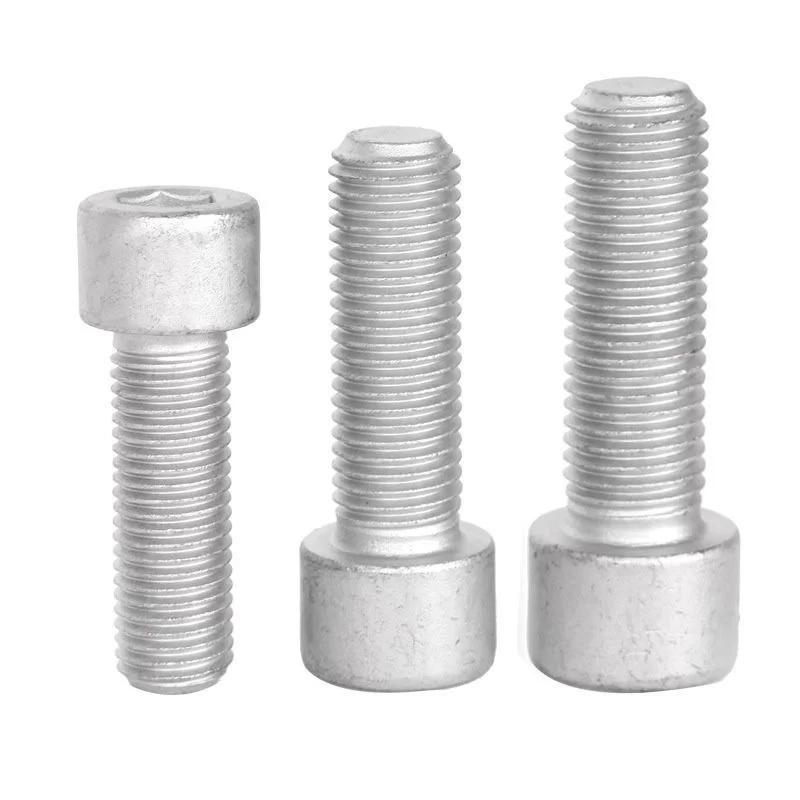
Industrial Fasteners fastener types Technical Analysis
Selecting the wrong hardware for a structural project is rarely a minor mistake; it is a systemic risk. From bridge construction to chemical plant piping, the integrity of the entire assembly rests on the precise interaction between the material properties and the specific fastener types employed.
The challenge for modern procurement managers is no longer just finding a supplier, but navigating the complex overlap of international standards like ISO, DIN, and ASTM. When a project demands high-tensile strength in corrosive environments, a generic bolt is insufficient. The decision process must transition from "cost-per-unit" to "lifecycle reliability."
This guide examines the technical selection logic for industrial fasteners, exploring how material grades and surface treatments mitigate structural failure and project delays.
Mechanical Foundations of Fastening Systems
At its core, fastening is the management of tension and friction. The efficacy of various fastener types depends on their ability to maintain a clamping force that exceeds the external loads applied to the joint. This requires a precise balance between the bolt's yield strength and the ductility of the material.
In industrial settings, this foundation is supported by rigorous adherence to dimensional standards. Whether utilizing M8 small-scale fixings or M30 heavy-duty structural bolts, the tolerance of the thread determines the stability of the connection under vibrational stress.
Technical Parameters for Grade Selection
The "Grade" of a fastener is the most critical indicator of its load-bearing capacity. For carbon steel, grades such as 4.8, 8.8, and 10.9 define the tensile strength. A Grade 10.9 bolt, for instance, is engineered for high-stress applications where failure is not an option, offering significantly higher yield points than Grade 4.8.
Material composition further dictates performance. While Q235 is suitable for general structural use, alloys like 40Cr or B7 are required for high-temperature or high-pressure environments, such as those found in petrochemical plants. The use of stainless steel (A2, A4) becomes mandatory when the primary threat is chemical oxidation rather than raw mechanical load.
Selection must also account for the length-to-diameter ratio. With customizable lengths ranging from 80mm to 800mm, engineers must ensure that the grip length is sufficient to engage the required number of threads, preventing stripping under peak load.
The Role of Surface Chemistry in Longevity
Mechanical strength is irrelevant if a fastener fails due to atmospheric corrosion. Surface treatments serve as the primary defense mechanism, creating a chemical barrier between the steel substrate and the environment.
The effectiveness of a surface treatment is not universal; Zinc Plating is sufficient for indoor humidity, but BZP (Bright Zinc Plated) or YZP (Yellow Zinc Plated) are required for industrial outdoor exposure to prevent premature oxidation and subsequent loss of clamping force.
Beyond standard plating, customizable coatings allow for specific environmental adaptations. In marine engineering or chemical processing, where saline or acidic vapors are present, the choice of surface treatment can extend the maintenance cycle of a project from two years to over a decade.
Performance Index by Material Grade
Evaluating the suitability of a fastener requires a comparative analysis of strength versus ductility. High-grade bolts (10.9) provide maximum tension but are more susceptible to hydrogen embrittlement if improperly plated. Conversely, lower grades offer more "give," which can be advantageous in applications subject to extreme thermal expansion.
The following index illustrates the relative performance of common industrial materials across key metrics such as corrosion resistance and load capacity.
Figure 2. Material Performance Relative Index
Application Scenarios in Heavy Industry
In a typical industrial setting, such as a chemical refinery, the demand for pipe hangers and supports is coupled with the need for highly specific nuts and bolts. Here, the risk of equipment damage due to improper support is high. The integration of B7 alloy fasteners ensures that the assembly can withstand both the weight of the fluid-filled pipes and the thermal fluctuations of the process.
For infrastructure projects like fencing and large-scale metal structures, the focus shifts toward volume and corrosion resistance. Utilizing a combination of hardware washers and zinc-plated bolt series allows contractors to achieve a balance between installation speed and long-term durability, ensuring that the structures remain stable without requiring monthly inspections.
Emerging Shifts in Fastening Standards
The industry is moving toward a "system-based" approach rather than a "component-based" one. This means that instead of simply buying a bolt, engineers are specifying the entire joint assembly—including the washer and nut—to ensure synergistic performance.
Digitalization is also impacting quality control. The move toward automated forging lines and CNC precision has reduced defective rates to below 0.05% in high-end manufacturing, allowing for tighter tolerances that were previously impossible with manual workshops.
Furthermore, there is an increasing demand for customized standards. While ISO and DIN remain the baseline, the rise of specialized marine and aerospace projects has led to a surge in custom-engineered fasteners that blend properties of multiple standards to meet specific safety certifications.
Comparative Framework for Procurement
Procuring fastener types for large-scale projects requires a decision matrix that weighs immediate cost against failure risk. A common error is selecting a material based on strength while ignoring the environmental chemistry, leading to premature failure.
A professional procurement framework should evaluate the supplier's production capacity—such as the availability of CNC lathes and automated lines—to ensure that the MOQ of 1000pcs can be met without compromising the lead time.
The table below provides a relative suitability guide for different fastener configurations based on common industrial requirements.
| Requirement | Material Choice | Surface Finish | Relative Suitability |
|---|---|---|---|
| High Load / Low Corrosion | Carbon Steel 10.9 | Zinc Plated | High |
| Moderate Load / High Salt | Stainless A4 | Natural / Passivated | Very High |
| High Temp / Pressure | Alloy B7 / 40Cr | Black Oxide / YZP | High |
| General Construction | Q235 / Grade 4.8 | BZP | Moderate |
| Chemical Exposure | Stainless A2 | Electropolished | High |
| Vibration Heavy | Alloy 20MnTiB | Customized | Very High |
Questions & Answers
The primary difference lies in the tensile strength and yield point. Grade 10.9 is significantly stronger and designed for critical structural joints where higher clamping forces are required. However, it is more rigid and can be more susceptible to hydrogen embrittlement if the surface treatment process is not strictly controlled. Grade 8.8 is a versatile mid-range option suitable for most industrial machinery.
While both are stainless steels, A4 (often called 316) contains molybdenum, which provides superior resistance to chlorides and marine environments. A2 (304) is excellent for general corrosion resistance and food-grade applications but may pit or corrode when exposed to saltwater or harsh industrial chemicals. Choose A4 for coastal projects or chemical plant interiors.
BZP (Bright Zinc Plated) provides a clear, silver finish and basic protection against humidity. YZP (Yellow Zinc Plated) typically offers a thicker coating and better resistance to atmospheric corrosion, making it more suitable for outdoor structural use. The choice depends on the expected environmental exposure and the required maintenance interval of the project.
Yes, if the length is not calculated based on the grip length and the required thread engagement. Too short a bolt leads to insufficient thread interlocking, while an excessively long bolt may introduce unnecessary weight and potential bending moments. Customization should always be paired with an engineering review of the joint thickness.
Industrial manufacturing relies on automated forging and CNC lines to maintain a defective rate below 0.05%. Setting a minimum order quantity (MOQ) ensures that the machine setup and calibration costs are amortized, allowing the factory to provide a consistent, high-quality batch that meets international standards like ISO or DIN without the variance found in small-lot manual production.
Mixing grades (e.g., using a Grade 4.8 nut with a Grade 10.9 bolt) creates a "weak link" in the assembly. The lower-grade component will yield or strip long before the bolt reaches its intended tension, leading to a total failure of the clamping force. Always ensure that the nut and bolt are graded for compatible load levels.
Final Thoughts
The reliability of any industrial structure is only as strong as its smallest component. By transitioning from generic procurement to a technical selection process based on material grade, surface chemistry, and dimensional precision, companies can eliminate the root causes of project delays and safety hazards.
Whether utilizing standardized ISO components or custom-engineered solutions for extreme environments, the goal remains the same: lasting reliability. Investing in precision-manufactured hardware is not an added cost, but a strategic insurance policy for the longevity of the infrastructure.
Leave A Comment