Specifying top quality stainless steel split ring pipe hangers and brackets company for Wholesale and OEM Orders
Unit price and service life diverge when a split ring is sized to nominal pipe diameter rather than the actual outside diameter, insulation allowance, and fixing arrangement. A low quote can reflect thinner strip, a simpler forming tool, or a bracket that needs extra adjustment at installation; those savings disappear if the clamp distorts or the fastener does not align. For a private-label order, match the drawing and installation conditions first, then compare price at the same material, dimensions, and finish.
Before comparing quotations, confirm whether the order covers split rings alone, ring-and-bracket assemblies, or assemblies with a liner and fasteners. Strip thickness, ring profile, hole position, weld or boss construction, and surface finish all affect tooling and unit cost. Existing tooling can shorten setup and spread die costs over a repeat order; a new diameter or bracket pattern may require sample approval and a different production schedule.
Scope of Supply and Physical Form
A typical assembly uses formed stainless strip shaped into two halves, a closure fastener, and a mounting feature or separate bracket. Depending on the design, the bracket may be stamped from strip or supplied as a formed component. A resilient liner is an option for applications that need pipe separation or reduced metal-to-metal contact; it changes the internal clearance and should appear on the approved drawing.
The ranges below are for early order planning, not a substitute for a controlled drawing. Actual dimensions and piece weight vary with pipe outside diameter, strip thickness, bracket geometry, fastener choice, and liner.
| Planning item | Indicative range or check | What sets the final specification |
|---|---|---|
| Pipe outside diameter | Common custom programs cover roughly 15–150 mm | Actual pipe OD, clearance, and any specified liner |
| Strip thickness | Often about 1.0–3.0 mm, subject to diameter and load design | Ring stiffness, forming limits, and approved load requirements |
| Piece weight | Approximately 0.1–0.8 kg across many small-to-medium assemblies | Ring size, bracket type, fasteners, and liner configuration |
| Mounting interface | Hole, slot, threaded feature, or separate bracket | Anchor type, installation access, and bracket drawing |
Where Cheaper Alternatives Fall Short
A thin or inconsistently formed ring can spring open unevenly at the joint. The installer then uses extra force to close it, which can shift the pipe or leave the fastener under uneven stress. A hole punched off position creates a separate fit problem: the bracket may sit at an angle even when the ring diameter is correct.
Surface condition is another cost divider. Rough edges and burrs can complicate handling, while a finish that does not match the order may bring rejection at incoming inspection. For stainless assemblies used in damp or corrosive service, confirm the specified grade and finish rather than relying on a generic “stainless” description. The economical choice is the one that holds the approved fit and finish across the batch, not simply the lowest piece price.
What Actually Determines Performance
Fit starts with pipe outside diameter and the inside profile after forming. Ring stiffness depends on strip thickness, width, material condition, and the shape of the formed arc. Bracket alignment and fastener engagement determine whether the assembly closes and mounts as intended. For lined versions, specify the liner’s material and compressed thickness because both affect the finished bore.
The practical working principle is straightforward: the formed halves surround the pipe, the closure fastener draws them together, and the bracket transfers the supported load to the building fixing. A hanger should not be assigned a load rating from appearance alone. State the intended service load, installation orientation, pipe contents, and support spacing so the design can be reviewed against the actual use.
Where This Product Beats Standard Alternatives
For pipe support in wet areas, washdown zones, or installations exposed to corrosive conditions, a correctly specified stainless assembly can avoid the early coating damage and rust complaints associated with unsuitable plated parts. That advantage depends on grade, finish, exposure, and maintenance; stainless construction does not remove the need to check compatibility with the site environment.
Against a basic plated hanger
Stainless can be the better buy where coating wear or corrosion drives replacement and service calls. It usually carries a higher material cost, so the value case is strongest when the site conditions justify it and the grade is matched to exposure.
Against a generic clamp
A drawing-matched split ring and bracket can reduce fit variation across a private-label range. The gain comes from controlled diameter, closure geometry, and hole location; it is not a benefit of branding by itself.
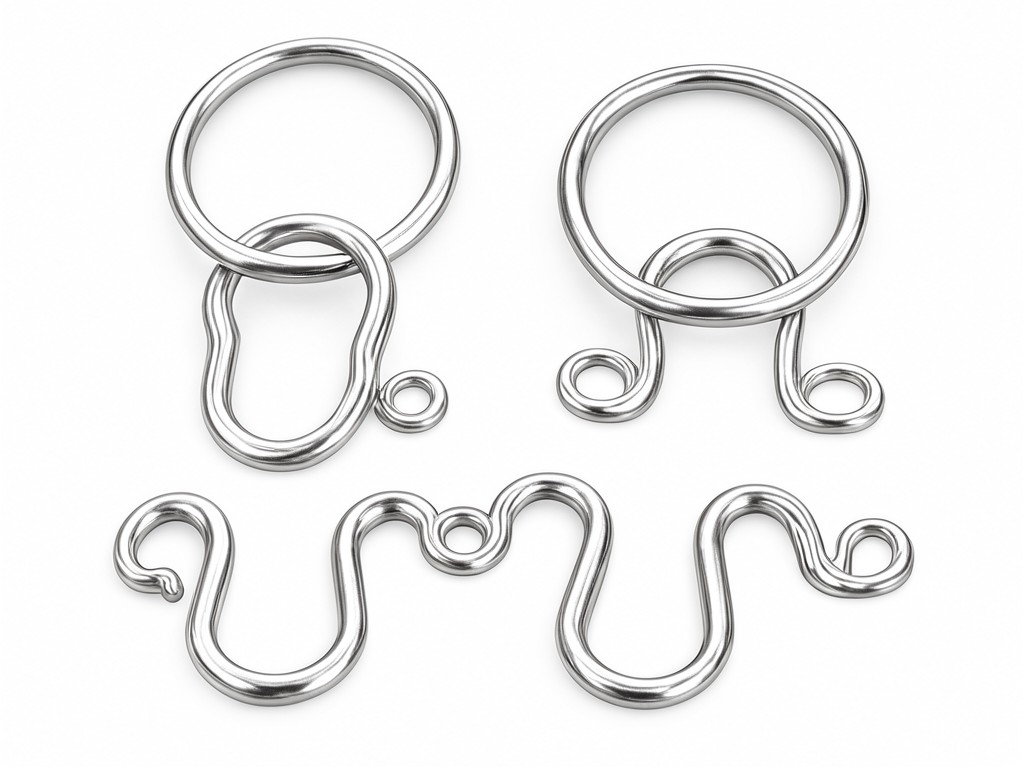
Option Comparison by Usage Level
For light-duty indoor supports, a simpler ring and bracket profile may meet the drawing at a lower conversion cost. More demanding installations can call for a thicker section, a reinforced bracket, a specified liner, or a different fastener arrangement. Those changes add material or production steps, so confirm that each one answers a stated service requirement.
The process choice also affects the quote. Forming tools establish the ring profile and repeat geometry; punching tools control holes and slots. Existing tools reduce initial setup expense, while a new diameter or mounting pattern adds tool development and sample checks. At higher order volumes, tooling cost can be distributed across more pieces, but only when the approved design remains stable for repeat production.
Customisation Options and Their Limits
Private-label matching can cover ring diameter, strip width and thickness, bracket shape, hole pattern, fastener type, liner, finish, and package identification. A dimension change that appears minor on a drawing can alter the forming radius or require a revised punch. Send a dimensioned drawing with tolerances, material grade, finish callout, liner details, and any reference sample before approving a production sample.
The commercial figures below are planning ranges only. Tool availability, part complexity, material sourcing, and sample approval affect the confirmed minimum and schedule; a quote should state whether tooling charges and sample costs are separate.
| Order route | Indicative MOQ basis | Indicative production planning |
|---|---|---|
| Repeat order with approved tooling | Often 500–2,000 pieces per size or configuration | About 3–6 weeks after specification and order confirmation |
| New profile or bracket tooling | Often 1,000–3,000 pieces, depending on tool and part complexity | Allow roughly 6–10 weeks for tooling, sample approval, and production planning |
Combining diameters under one purchase order does not always reduce the MOQ for each size because each profile may require a separate setup. A stable forecast and fewer drawing revisions help use tooling time efficiently and keep repeat pricing predictable.
Usage Scenarios and Buyer Segments
Distributors often need a range of diameters with consistent packaging and clear part identification, so warehouse staff can pick the correct assembly without opening every carton. Wholesale buyers serving plumbing and mechanical contractors need repeat dimensions and dependable bracket alignment across replenishment orders.
Private-label buyers typically focus on matching an existing specification, not redesigning the hanger. For facilities with damp service conditions, buyers should confirm stainless grade, finish, and contact materials against the application. Where a line has insulation, specify the installed outside diameter and required clearance; a bare-pipe dimension alone can produce an assembly that will not close around the finished pipe.
Quality Control and Batch Consistency
Checks should follow the approved drawing and sample. Incoming material records can be tied to the production lot; in-process checks can cover strip thickness, formed diameter, hole position, edge condition, and bracket angle. Final inspection should also confirm closure fit, fastener engagement, finish, and the ordered piece count.
- Use go/no-go gauges or measured samples for critical ring dimensions and mounting-hole locations.
- Inspect formed parts for distortion, burrs, cracks, and inconsistent edges before packing.
- Check fastener fit and bracket alignment on assembled samples from the batch.
- Record approved material, finish, drawing revision, and lot identification for repeat orders.
A sample approval is most useful when it records measurable acceptance points, not just appearance. For export cartons, agree on protection against part-to-part rubbing, carton quantity, labels, and batch marks before shipment. These details reduce receiving disputes and help a distributor replenish the same specification later.
Request a Specification-Matched Sample
Send the drawing or reference part, target quantities by size, material and finish requirements, liner details, and packaging needs. A pre-production sample gives your team a chance to confirm fit and label details before the order enters repeat production.