Top Quality 1 1 4 riser pipe clamp support Solution: Specification, Ordering and Quality Notes
When a brand extends an existing range, a 1 1/4-inch riser clamp may look like a small line item. On a vertical pipe run, though, the clamp has to bear against the intended structural surface and hold the pipe without slipping or distorting it.
For a private-label buyer, the cost of a mismatch is more than the replacement part. A clamp that does not suit the pipe outside diameter, bolt arrangement or site coating can delay installation and erode margin through returns, repacking and support calls. Agree the drawing, sample and acceptance points before committing the production quantity.
The Problem Buyers Keep Paying For
A nominal 1 1/4-inch pipe size does not by itself define every clamp dimension. Pipe material and specification affect outside diameter, while the clamp drawing sets the ring profile, bolt position and bearing contact. If a buyer approves a sample against a nominal label alone, the delivered clamp can be difficult to seat or may not match the installer’s expected hardware.
Coating choice creates another cost trade-off. A finish suited to dry indoor stock can show corrosion sooner in damp storage or exposed service. Moving to a heavier protective coating may improve weather resistance, but it can affect fit at the joint and change unit cost. Confirm the service environment, coating requirement and final assembled dimensions as one specification.
The practical target is not the lowest purchase price; it is fewer installation exceptions and fewer credit claims per order.
Where This Product Beats Standard Alternatives
A purpose-specified riser clamp can reduce rework when the pipe size, bearing surface and installation hardware are agreed before manufacture. Use this decision path to set the purchasing brief:
- If the pipe specification is fixed, provide its outside diameter and the drawing reference. Approve fit against that dimension, not only the nominal size printed on the carton.
- If the clamp must match an installed range, send a controlled sample or dimensioned drawing with the required tolerances.
- If the part is a new design, define the load path and bearing interface with the responsible project engineer before assigning a load claim.
- If the clamp will face moisture or outdoor exposure, specify the coating type and appearance requirement; do not treat “galvanized” as a complete finish description.
- If the installation method depends on particular bolts or nuts, include the hardware configuration in the approved sample and packing specification.
A clamp’s stated capacity depends on clamp geometry, pipe contact, fasteners and the supporting structure. Do not assign a load rating from the nominal pipe size alone; confirm the complete installation basis before a rating appears on packaging or sales literature.
Buying Mistakes That Lead to Returns
Most disputes start with an approval gap, not a dramatic manufacturing defect. Keep the released specification specific enough that purchasing, production and incoming inspection all refer to the same version.
- Approving a sample without recording its measured dimensions leaves later batches open to interpretation.
- Changing the coating after sample sign-off can alter fit, colour and surface appearance. Treat a finish change as a new approval point.
- Using artwork that does not match the final pack quantity, label position or carton orientation can trigger repacking even when the hardware is correct.
- Ordering from a legacy description without checking the current drawing risks mixing different revisions under one product code.
Record tolerances, finish, hardware and pack details in the purchase specification. A verbal note is not a controlled substitute for an approved drawing or sample record.
Customisation Options and Their Limits
Common specification choices include the clamp profile, steel thickness, hole or bolt arrangement, surface finish and supplied hardware. Each change can affect tooling, forming sequence, coating coverage or assembly fit, so define the requested feature on a marked drawing rather than relying on a product name.
Private-label packaging and identification can also be specified, subject to artwork review and the available pack format. Submit vector artwork, label dimensions, colour references and placement requirements before the sample approval stage. A branding change may be simple; a profile or hole-location change can require tooling review and a new fit sample.
Treat the signed drawing, approved sample and packaging proof as separate checkpoints. Production release should identify the accepted revision for each, including any agreed dimensional tolerances and finish description.
Quality Control and Batch Consistency
Inspection should follow the approved drawing and sample, with checks for the dimensions that control pipe fit, clamp closure and bearing position. A practical incoming plan can include dimensional checks, visual review of forming and edges, coating coverage, and confirmation that the supplied fasteners and pack count match the order.
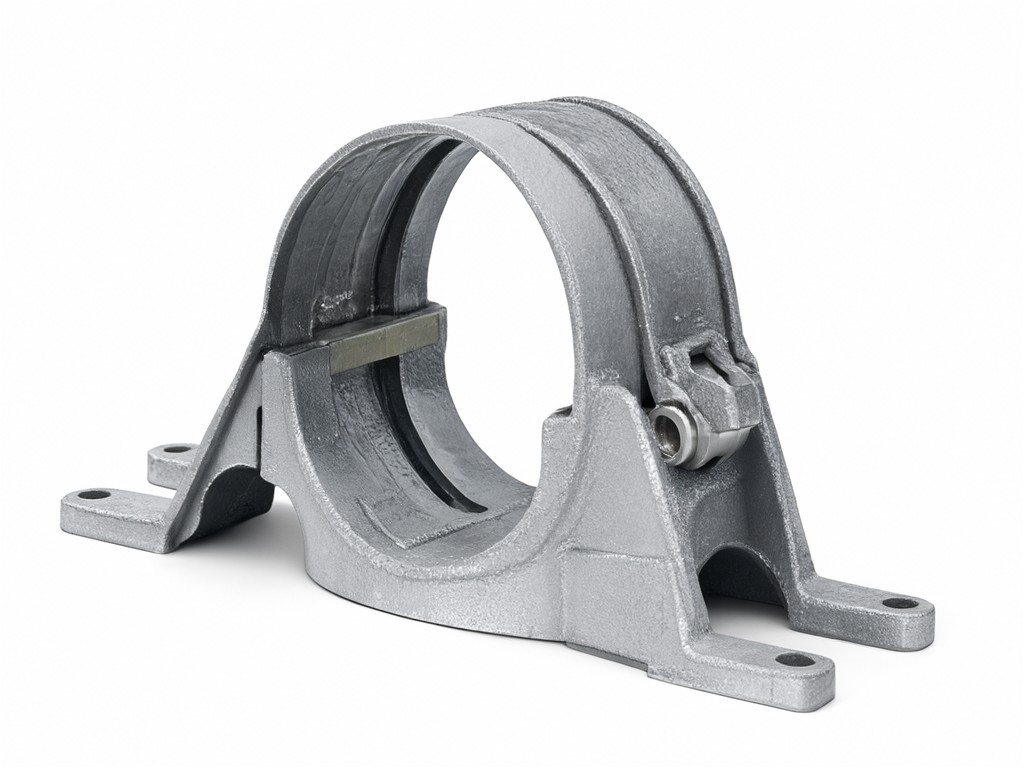
For repeat orders, retain the approved reference and compare production lots against the same revision. If corrosion exposure is a purchasing requirement, agree the coating and any verification method before quoting; do not infer a test result from the finish name. Batch identification on cartons helps connect a field complaint to the production lot and inspection record.
A change in material thickness, coating source or forming setup should trigger a review before shipment, since each can affect clamp fit or appearance.
Capacity, Tooling and Scheduling
Moving from sample orders to container loads changes the cost calculation. Setup, tooling condition, finish batches and export packing all affect the schedule and quoted unit cost. Use the matrix to frame the conversation; actual MOQ and lead time depend on the released drawing, material and order mix.
| Order stage | Specification and usage focus | MOQ and schedule basis | Cost-per-sale consideration |
|---|---|---|---|
| Sample or pilot | Confirm pipe fit, closure, finish and any installation hardware against the intended use. | Sample charges, available tooling and any custom setup are confirmed after drawing review; production timing begins after approvals. | A controlled pilot can prevent expensive stock corrections after a launch. |
| Repeat wholesale order | Hold the released dimensions, coating, hardware and pack specification stable across replenishment lots. | MOQ reflects material and finish batch quantities, packaging requirements and production setup; lead time is scheduled against confirmed capacity. | Combine forecasts where practical to reduce repeated setup and avoid excess slow-moving inventory. |
| Private-label launch or custom revision | Approve the revised drawing, fit sample and artwork proof before bulk production. | Tooling review, sample iteration and packaging setup can extend the schedule; confirm MOQ after the revision scope is set. | Clear approvals reduce launch holds, rework and returns that can outweigh a lower piece price. |
Tooling ownership, maintenance responsibility and change-control terms should be agreed in the quotation or purchase agreement. If an existing tool is used, inspect its condition against the required dimensions before relying on it for a large repeat order.
Stock Availability and Reorder Planning
Stock status depends on the exact clamp revision, coating, hardware and packaging configuration. A visually similar size may not be interchangeable if its bearing shape, bolt spacing or finish differs from the approved version.
Before setting a reorder point, confirm whether the supplier holds finished goods or only raw material and standard components. Allow extra time for a changed coating, artwork revision or custom pack, and keep the product code tied to the approved drawing revision. For repeat programs, share forecast windows early enough to coordinate production and export packing without buying more stock than the sell-through rate supports.
Planning a tooling review? Send the current drawing, pipe specification, target finish, expected order volume and any reference sample. We can review fit-critical dimensions and approval steps before quotation and sample release.