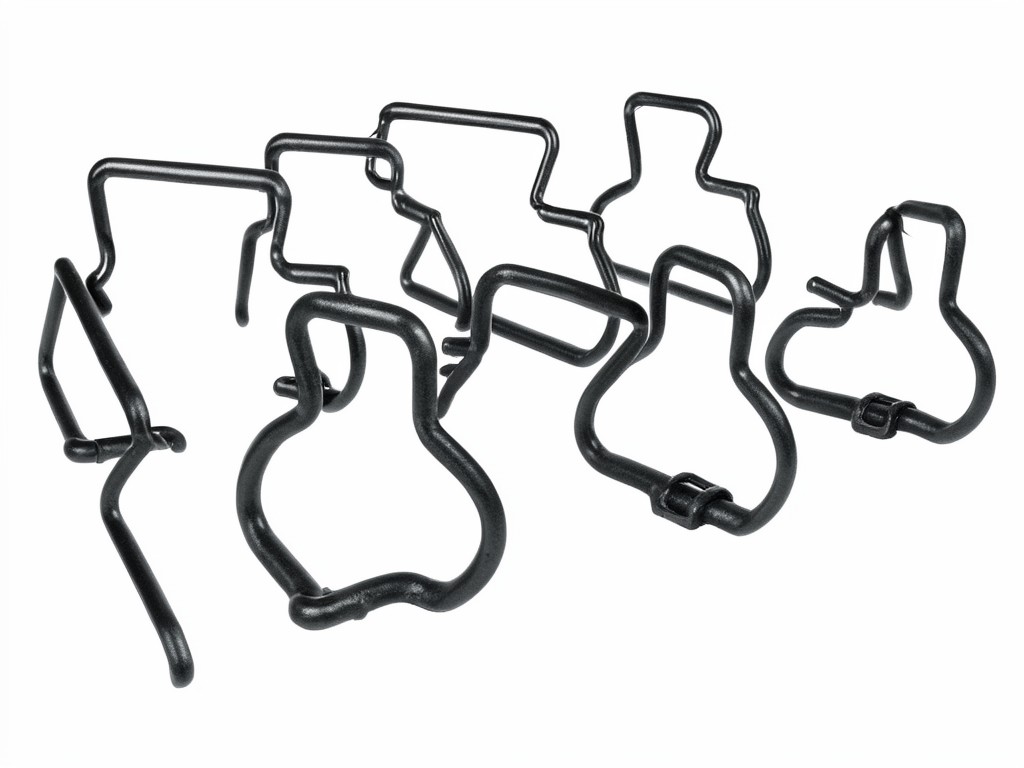
China black iron pipe hangers - Bulk Supply and Specification Guide
Material choice starts with the conditions the product will meet: pipe outside diameter, support spacing, service load, and exposure to moisture or corrosive environments. For black iron pipe systems, a hanger must match the pipe and installation hardware; the pipe’s black finish does not define the hanger’s material or coating.
Formed carbon-steel hangers suit many repeat-volume orders where dimensions and unit cost matter. A cast option or a different protective finish may be appropriate where the drawing, loading conditions, or environment calls for it. Agreeing the construction and inspection points before a second-source run helps prevent size, mass, or finish drift from turning into installation delays and reorder claims.
Working as a Production Partner, Not a Catalogue Supplier
A second source needs to reproduce the approved part, not simply offer a hanger with a similar name. Pipe range, strap or ring geometry, fastener interface, material thickness, weld locations, and finish should be tied to the same controlled drawing revision and purchase specification.
- Send the part drawing or a dimensioned sample, including the supported pipe outside diameter and the required connection details.
- Specify the steel grade or approved material basis, thickness, coating or finish, and any application-specific load requirement. Do not treat a general hanger description as a load rating.
- Approve a pre-production sample against fit, closure, hole or thread location, and finish before releasing the bulk order.
- Set acceptable dimensional and finish ranges for repeat orders; compare retained samples or agreed reference parts when a new lot is released.
A small change in strap width, hole position, or ring diameter can affect fit across a full installation. Lock the drawing revision and key inspection dimensions first; that gives both suppliers a clear basis for comparable quotations and repeat production.
What Gets Checked Before Shipment
Inspection should follow the failure risks of the installation. A hanger that is out of round or has a misplaced hole can be difficult to fit; an inconsistent coating can create early corrosion complaints or visible differences between cartons. Agree the sampling plan and any application-specific load checks before production, since acceptance limits depend on the drawing and buyer requirements.
| Installation or Exposure Condition | Complaint to Prevent | Construction and Release Check |
|---|---|---|
| Repeated installation on the same pipe size | Hangers bind, sit loose, or require field adjustment between lots | Match the approved ring or strap dimensions and check formed profile and closure against the controlled drawing. |
| Assemblies with a threaded or welded attachment | Misalignment at the fastener, weak weld appearance, or inconsistent assembly fit | Specify thread and attachment details; inspect position and weld appearance, with agreed checks for the actual joint design. |
| Damp locations or extended export storage | Rust spots, coating damage, or finish variation visible after unpacking | Name the finish and coverage requirements; check coating condition and, where specified, coating thickness or corrosion exposure results. |
| Orders placed across multiple production lots | Fit, unit-weight, or finish drift that causes mixed inventory and return costs | Record agreed dimensions, sample unit weights, finish references, and lot identification for comparison at release. |
Unit weight works as a useful process signal when material thickness and part geometry are fixed, but it does not replace dimensional or joint inspection. If the buyer requires a load check, define the fixture, loading direction, sample quantity, and acceptance criterion against the intended application.
Export Packaging and Handling Protection
Hangers can rub against one another during transport, which may mark a coated surface or expose edges to moisture. Pack by part number and finish, use dividers or inner bags where the surface requires separation, and select carton strength for the packed unit weight and route. Confirm carton quantity, labels, and any pallet configuration before the first shipment so receiving teams can identify lots without opening mixed cartons.
For repeat supply, the packing specification should also state whether cartons need batch labels, order references, or a buyer-specific mark. Those details cost little to standardize early and reduce sorting work at the distribution point.
Care, Storage and Service Life
Service life depends on the specified material and finish, the environment, and the load and installation conditions. Store cartons dry and off the floor; damaged packaging or trapped moisture can start corrosion before installation. Keep different finishes and production lots separated until the installer or distributor has checked the identification labels.
Before use, inspect for bent profiles, damaged coating, damaged threads, and weld defects. A hanger with visible damage should be segregated rather than forced into place, since installation strain can worsen the defect and complicate later claims. Cleaning or touch-up procedures should follow the finish supplier’s guidance and the project specification.
Ordering, Tooling and Lead-Time Questions
Which details are needed to quote a second source?
Provide the drawing or sample, pipe size, material and thickness requirement, finish, attachment details, annual or order quantity, and packing instructions. If the hanger has a specified service load, include the design basis and required verification method; a supplier should not infer a rating from appearance alone.
When might tooling affect price or schedule?
A new profile, hole pattern, or forming sequence may require dedicated tooling or a fixture, while a standard geometry can reduce setup cost. Confirm tooling charges, ownership, maintenance responsibility, and sample approval steps in the quotation. Lead time should be confirmed after drawing review and agreement on material, finish, and packaging rather than estimated from the product name alone.
How is the minimum order quantity set?
MOQ depends on the part’s setup, material purchase, finish batch, and packing format. Combining repeat orders under a controlled specification can improve cost efficiency, but separate finishes or custom carton labels may require separate production or packing runs.
For a quotation review, send the approved drawing revision, current purchase specification, target volume, and known lot-to-lot concerns. Contact the production team to review the second-source scope before sample approval and bulk release.