bulk phd clevis offset pipe joist hangers top factory: Specification, Ordering and Quality Notes
Wear shows up at the same point every season: at a pipe contact edge, a fastener interface or an exposed finish that faces moisture. For importers and private-label buyers, a low unit price can lose its value when dimensions or finish drift between lots and installers reject parts that should fit.
How It Performs in Use
A clevis-style pipe support carries the pipe in a formed lower member while its upper connection transfers the load to the specified rod, joist attachment or supporting structure. The offset sets the pipe’s position relative to that connection. If the offset, pipe seat or fastener geometry changes from the approved sample, installers may need to force alignment or substitute hardware; that adds labour and can turn into a return or a delayed reorder.
Fit is the first service check.
Pipe outside diameter, support width, offset, hole position and mating fastener must match the buyer’s drawing or approved physical sample. Confirm whether the required item is a pipe clevis offset hanger, a joist-mounted pipe support, or an assembly that combines both interfaces; those geometries are not interchangeable by name alone. A smooth, burr-free pipe seat and accessible fastener points also affect how the part feels to handle and install.
Do not set a load rating from appearance or gauge alone. Confirm the complete support assembly, attachment, material thickness and intended service with the approved engineering documentation before quoting or marking a rated capacity.
Specification Range and Customisation Limits
Order around the interface dimensions, not a catalogue name alone. “Offset” can refer to different reference points across drawings, so the drawing should identify the centreline or surface from which the offset is measured. Dimensions and tolerances below are set against the approved specification; no universal range is assumed for this product family.
| Construction route | What the buyer specifies | Commercial consideration |
|---|---|---|
| Formed and punched components, assembled with the drawing-specified fastener | Pipe seat, offset reference, hole locations, thickness, fastener dimensions and finish | A straightforward repeat route when geometry stays fixed; tooling and setup depend on the approved profile and hole pattern. |
| Formed components with a welded feature, only where the drawing calls for one | Weld location, joint geometry, post-weld dimensions and finish coverage | Adds a process and inspection step; use it only when the required interface or load design needs that construction. |
Before production, approve the material designation, thickness, finish, dimensional tolerances and any stated load requirements as one controlled specification. Changing thickness or finish after sample approval can affect fit, forming behaviour, coating coverage and landed cost; a substitution needs buyer approval rather than an informal factory-side adjustment.
What Can Be Customised and What Cannot
Hole position, offset, pipe-seat profile, fastener arrangement, finish and packaging can be quoted to a controlled drawing, subject to tooling and process review. A private-label mark or carton label can also be specified when its location, artwork file and traceability fields are agreed before the order is released.
The interface cannot be treated as a cosmetic variation. Pipe size, mating hardware, joist connection and any rated capacity must remain within the approved design basis. If one changes, the fit and engineering review must be repeated; a sample that looks similar is not proof that the assembly is interchangeable.
Suitable for Drawing-Based Changes
Dimensions, finish, identification and export pack configuration can be reviewed against volume, tooling and handling requirements.
Not Safe to Assume
A change in material thickness, attachment geometry or load claim is not a like-for-like revision. It requires documented review and a new approval where the design is affected.
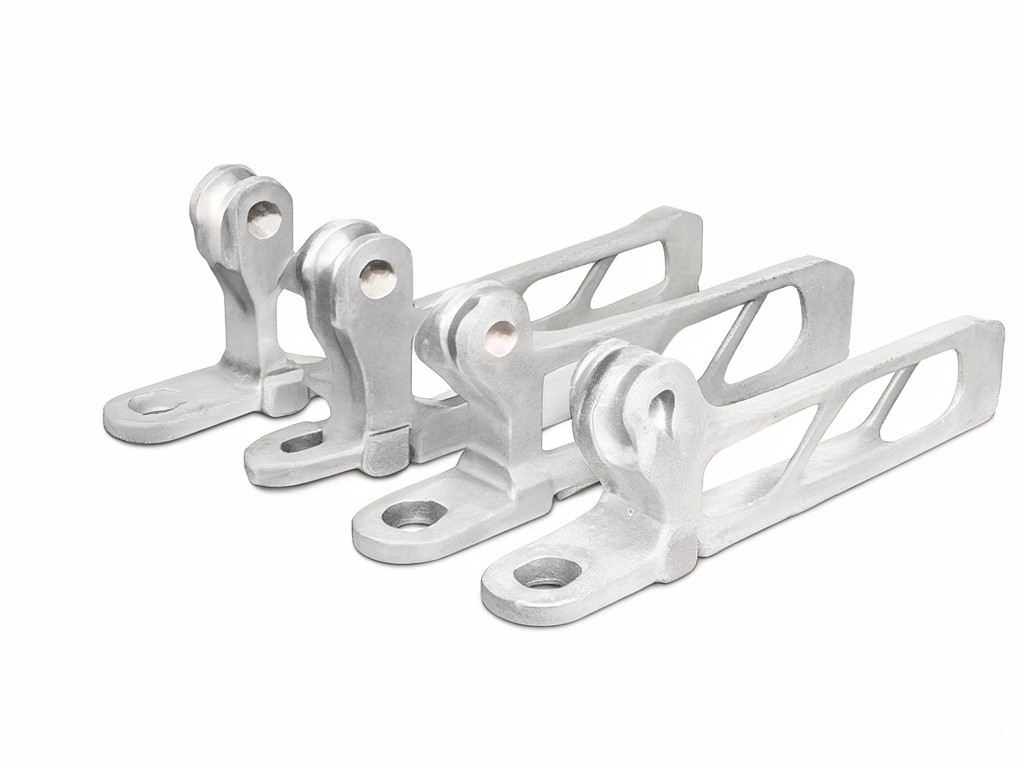
Inspection Items and Test Methods
Most disputes begin with a small lot-to-lot shift: a hole that no longer aligns, an offset that moves the pipe, or a finish difference visible beside the previous shipment. Agree the drawing revision and sample reference first, then inspect the features that determine installation and weather exposure.
| Service condition | Complaint or failure seen | Specification and check to prevent recurrence |
|---|---|---|
| Repeated installation on the same pipe and support layout | Pipe seat or hole pattern varies; installer has to pull parts into alignment. | Record the approved pipe size, offset datum and hole dimensions; check samples and production parts with gauges or dimensional measurement against the controlled drawing. |
| Outdoor or damp service with recurring wetting | Corrosion appears at edges, holes or a damaged coating surface. | Specify the coating or plated finish and coverage expectations; inspect finish appearance and, when agreed, coating thickness or corrosion exposure by the buyer’s chosen method. |
| Handling and assembly across multiple cartons or lots | Burrs, mixed fasteners or inconsistent finish colour lead to installation complaints and reorder uncertainty. | Check exposed edges, fastener identity and finish against the approved sample; retain lot identification so a complaint can be traced to its production batch. |
A load or proof test belongs in the inspection plan only when the assembly, test setup, acceptance criteria and responsible engineering approval are defined. For weather resistance, a test method and exposure duration must also be agreed; no single corrosion result predicts service life in every installation environment.
Keeping Repeat Orders Supplied
Repeat supply depends on holding the same drawing revision, approved finish and packing configuration across purchase orders. For private-label programmes, agree carton quantity, labels, batch identification and mixed-item rules before the first shipment; those details help receiving teams separate lots and help procurement identify the source of a fit or finish complaint.
- Keep the approved sample and revision-controlled drawing as the reference for each reorder.
- Review lead time against tooling status, finish route, order volume and any label or carton changes; confirm the schedule for each purchase order.
- Use a pre-production sample when the geometry, finish or packaging has changed, rather than relying on a previous lot’s appearance.
For a sample request, send the pipe size, offset definition, attachment details, material and finish requirements, target order volume, and any approved drawing or reference part. A fit sample can confirm interfaces before a bulk commitment; it does not replace a documented load review.
Request a sample and quotation through our contact page. Include the required dimensions and finish so the sample can be checked against the installation interface, not just its general shape.