best price sliding shoe pipe support for insulated pipe producer: Specification, Ordering and Quality Notes
Replacement rate, not unit price, sets the cost of a sliding shoe pipe support when a support corrodes, binds or no longer holds the insulation clear of the supporting steel. A lower-cost configuration can suit a dry, sheltered line; outdoor exposure, washdown or greater movement may justify a different steel grade or sliding surface. Match the support to pipe load, insulation build-up, movement and site environment before comparing unit prices.
For insulated pipe producers, the purchasing goal is usually to match an approved drawing or private-label specification without changing the support geometry. The product is a fabricated shoe assembly: a pipe attachment transfers load to a base, while the shoe’s height and bearing arrangement preserve the insulation clearance and allow movement across the supporting structure. Final dimensions and material choices depend on the line design.
Scope of Supply and Physical Form
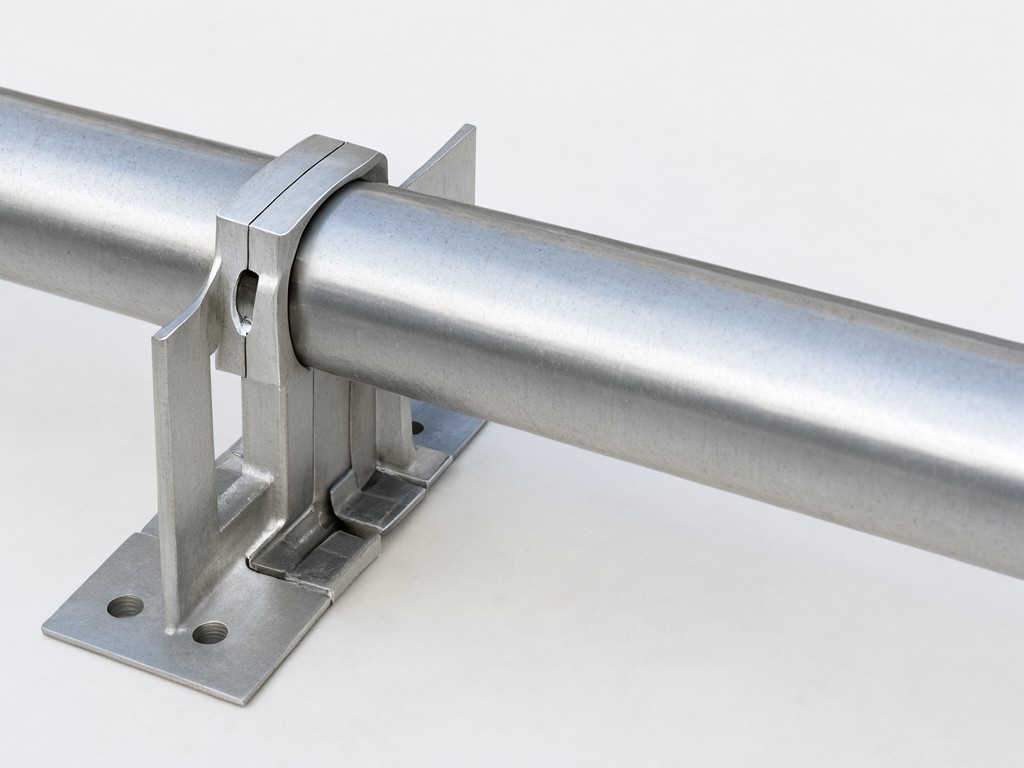
A typical supply is a welded or mechanically assembled steel shoe with a pipe-contact component, vertical web or side plates, and a base that bears on a structural support. Depending on the drawing, the sliding face may be bare metal or include a low-friction plate. The insulation itself is generally specified separately; the shoe must accommodate its thickness and jacket without crushing the insulation or leaving the pipe unsupported.
Supply scope should state whether the shoe arrives as a complete assembly, whether slide material is included, and which parts receive a protective finish. A drawing revision, pipe outside diameter, insulation thickness and support location are practical minimums for quotation. For repeat orders, retain the approved assembly drawing and material schedule as the reference rather than relying on a product name alone.
Design Constraints Behind the Specification
Set the shoe height from the insulated pipe assembly, not from the bare pipe diameter. The support must carry the specified load while keeping the insulation and outer jacket clear of the steel beneath the shoe.
Thermal movement drives the sliding interface choice. If the base bears on a painted or coated structural surface, confirm that the selected shoe face can move against that surface without excessive wear or binding. Where movement, load or operating temperature is not stated, a supplier cannot responsibly choose a slide material from the pipe size alone.
Weather exposure also changes the cost calculation. Galvanized carbon steel is often considered for general outdoor service, while stainless steel may be specified where the environment or cleaning regime makes corrosion resistance a priority. The metal grade, finish coverage, weld details and any polymer slide component should follow the project specification; no finish prevents damage if the assembly is stored wet or handled roughly.
UV exposure mainly affects exposed non-metallic parts and the pipe insulation jacket, not the steel shoe itself. For sites with washdown, chemical cleaning or abrasive debris, confirm compatibility for every exposed component and specify protection for the sliding face. The decision rule is to price the service environment and replacement access, not just the steel weight.
Specification Range and Customisation Limits
There is no useful universal size or weight for a sliding shoe: both follow the pipe, insulation, load and support layout. These cards identify the inputs that should be fixed before a production quote.
Pipe and insulation
Provide pipe outside diameter, insulation thickness and jacket clearance from the current drawing.
Movement and load
State the design load, direction and required travel; these inputs affect shoe geometry and sliding-face selection.
Environment
Identify outdoor exposure, washdown chemicals, corrosion conditions and storage duration before choosing steel and finish.
Use the comparison below as a selection framework, not as a substitute for the project drawing. Dimensions, finished weight and material grade must be confirmed against the approved specification.
| Configuration | Size and material basis | Trade-off to price |
|---|---|---|
| Fabricated carbon-steel shoe with project-specified protective finish | Pipe diameter, shoe height, base dimensions and plate thickness follow the drawing; finished weight is calculated from that build. | Usually a cost-conscious choice for general service. Confirm coating coverage and corrosion conditions for outdoor or wet locations. |
| Stainless-steel shoe assembly | Grade, plate dimensions and assembly weight require project approval; do not infer grade from appearance. | Higher material cost may fit corrosive or frequently cleaned environments. Check that the specified grade suits the actual exposure. |
| Metal shoe with a polymer sliding face | Shoe dimensions follow the support drawing; slide material and thickness are selected for load, temperature and travel. | Can reduce metal-to-metal contact, but the polymer’s temperature and chemical limits must match site conditions. |
Option Comparison by Usage Level
General outdoor service
A finished carbon-steel assembly may be appropriate where corrosion exposure is limited and the line’s movement does not call for a separate slide plate. Compare finish coverage and expected maintenance access against the lower initial material cost.
Frequent movement or harsh exposure
A specified slide interface or corrosion-resistant metal may cost more per piece. It can be the better fit when movement, cleaning or replacement access makes wear and corrosion expensive to manage.
“Usage level” should refer to duty conditions, not a generic light- or heavy-duty label. Ask the project engineer to confirm load and travel, then compare material and finish against the maintenance plan. If the pipe support drawing already names a grade or slide material, use that callout rather than substituting on price alone.
Assumptions Buyers Should Stop Making
A shoe that fits the bare pipe is not automatically right for an insulated assembly. An unchanged outside diameter can still require a different shoe height when insulation thickness or jacket clearance changes. Confirm the full insulated envelope before approving a sample.
A heavier assembly does not, by itself, prove that the load path or sliding arrangement is correct. Shoe geometry, weld placement, base contact and the specified travel all matter. Likewise, a protective coating should not be treated as a universal answer to corrosion, abrasion or chemical cleaning.
Finally, do not assume an established part name captures every revision. Record drawing number, revision, material, finish and slide-face details on the purchase specification. That record reduces substitutions and avoids disputes when a reorder follows an updated insulation or support schedule.
Customisation Options and Their Limits
Custom work is most straightforward when the buyer supplies a controlled drawing and separates essential dimensions from preferences. Changes to shoe height, base width, plate thickness or slide material can affect fit, weight, material use and fabrication setup. Confirm engineering approval before treating a dimension change as a like-for-like substitution.
| Custom item | Buyer to define | Limit to resolve before release |
|---|---|---|
| Shoe and base geometry | Pipe size, insulation thickness, clearances, base dimensions and attachment details. | Dimensional changes can alter load transfer and fit at the supporting structure; confirm against the approved design. |
| Metal and protective finish | Material grade, finish type, coverage expectations and service environment. | Confirm compatibility with weld details, exposure and any required downstream finishing process. |
| Sliding face | Material, location, thickness and required travel direction. | Confirm operating temperature, load and chemical exposure before selecting a polymer or metal-to-metal interface. |
| Identification and private-label details | Part number, revision marking and any approved label or mark format. | Keep identification legible without obscuring required markings or changing the part’s specified finish. |
Private-label identification can be added to an approved configuration, but branding does not replace material traceability or drawing control. Send artwork or marking requirements with the part number and revision, then approve a sample or drawing proof before release.
Ordering, Tooling and Lead-Time Questions
A complete inquiry should include the latest drawing, bill of materials, required quantity, destination market and any private-label marking. Note which dimensions are fixed and which may be quoted as alternatives. If a new fixture or forming tool may be needed, ask for a tooling review against the expected reorder volume before approving a one-time production setup.
Can the supplier match an existing support without redesigning it?
Usually, if the buyer provides a readable drawing or a complete dimensioned sample and confirms the material and finish. A sample alone may not show hidden weld details, slide material or required travel, so document those items before approving production.
What affects the price of a custom configuration?
Steel grade, plate thickness, coating, slide components, fabrication complexity and order quantity all affect the quote. Nonstandard geometry or a new fixture can add setup cost; repeat orders against an approved drawing can reduce uncertainty, but the supplier should confirm commercial terms for each configuration.
When should lead time be confirmed?
Confirm it after the drawing, material, finish, quantity and any tooling requirement are settled. Material availability and approval cycles can change the schedule, so request a project-specific commitment rather than planning around a generic production estimate.
For a tooling review, send the current support drawing, pipe and insulation details, expected order pattern, and any sample or marking requirements. Request a drawing and tooling review before locking the private-label specification.