affordable u bolt for mounting to angle iron top supplier - Bulk Supply and Specification Guide
Fatigue appears at the stress concentration where the U-bolt legs meet the bend, especially when the clamp is too narrow for the mounted part or the nuts are tightened unevenly. A lower unit price does not help if fit errors create returns, sorting work, or repeat freight costs. Agree the angle iron dimensions, clamped-part profile, and material before selecting a production price.
Scope of Supply and Physical Form
Supply is based on a formed round-bar U-bolt with two threaded legs, matched nuts, and washers when requested. For mounting at the top of angle iron, the drawing must show whether the legs pass around a pipe, tube, or other component and how the assembly bears against the angle. The clamped item’s outside profile and the angle’s thickness affect inside width, bend radius, and usable thread length.
Fit dimensions
Inside width, inside length, bend radius, and leg length are set from the approved drawing or sample.
Thread details
Specify thread diameter, pitch, usable length, and nut type; these determine assembly clearance and purchase cost.
Finish and material
Choose carbon steel with a specified coating or stainless steel to suit the exposure and target cost.
| Specification | Typical supply basis | Buyer decision |
|---|---|---|
| Thread and rod size | Metric thread sizes are commonly quoted across M6-M16; confirm the current production range and tooling. | Set diameter and pitch from the mating nut and the required clamp load. |
| Inside width and leg length | Made to the approved dimensioned drawing or checked reference sample. | Allow for the clamped part, angle thickness, washer, and nut engagement. |
| Finished weight | Calculated from rod diameter, developed length, material, and included hardware; confirm by approved sample. | Use a weight band for packing and landed-cost estimates, not as a substitute for fit dimensions. |
| Material and finish | Carbon steel with a specified plated or galvanized finish, or stainless steel grade selected for the environment. | Account for coating thickness at the thread and the service exposure before fixing the price. |
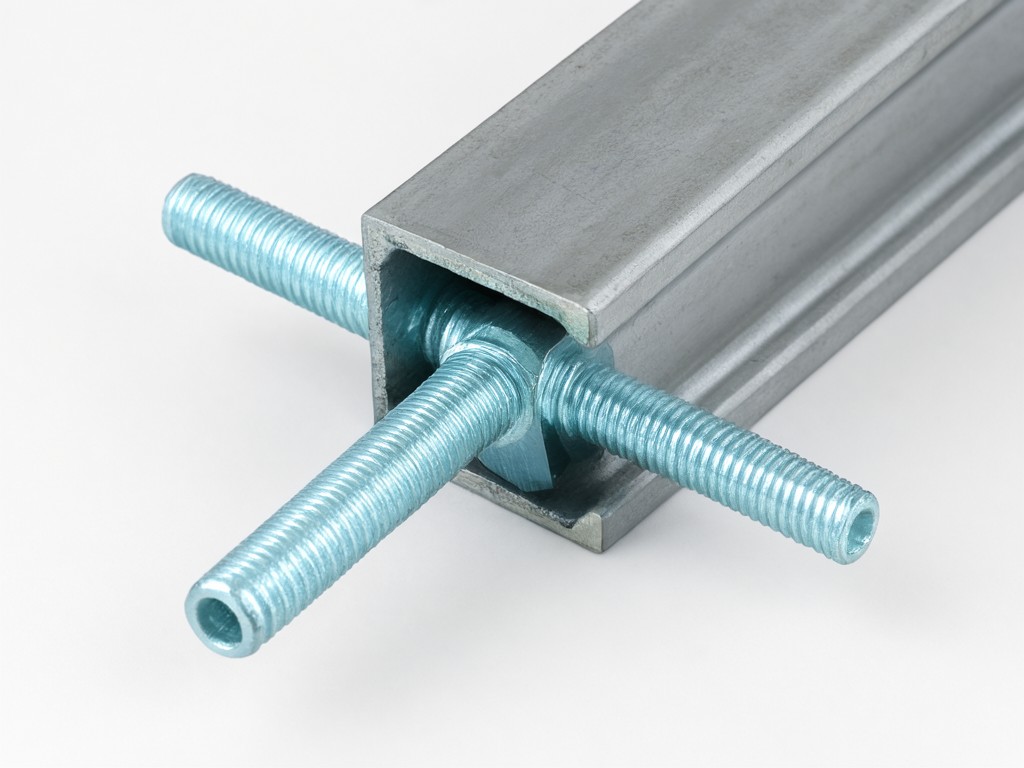
Bending and thread-forming sequence can affect leg parallelism and thread condition. Ask the supplier to state the process basis on the quotation so samples and production lots follow the same agreed construction.
Buying Mistakes That Lead to Returns
The limiting factor is rarely the headline specification. A U-bolt can match the rod diameter and still fail at installation if the internal dimensions ignore the clamped part, the angle profile, or coating allowance. Loose tolerances may reduce the quoted price but shift cost to distributors through fit complaints and replacement handling.
- Measuring across the outside of the angle rather than specifying the required inside clearance can leave the legs too close together.
- Ordering a short leg without checking washer and nut stack height can leave too little thread engagement after assembly.
- Treating a coated thread as identical to an uncoated thread can cause tight nut run-down and a poor hand-fit feel at installation.
- Approving a sample by appearance alone misses variation in bend symmetry, leg parallelism, burrs, and finished weight.
The economical decision is to record functional dimensions and acceptance tolerances before purchase approval. If the mounting has a narrow fit window, provide the mating part or a verified sample for a fit check before releasing the production order.
Working as a Production Partner, Not a Catalogue Supplier
For a repeat item, the drawing should identify material, rod diameter, inside dimensions, leg length, thread form, finish, and included hardware. A marked drawing revision gives the buyer and factory one reference when a dimension changes; a verbal instruction or unlabelled sample does not.
Approval rule: Confirm drawing revision, dimensional tolerances, finish, and sample disposition in writing. Production starts after the buyer approves the agreed sample or drawing basis; any later change requires a revised approval record.
A physical sample helps settle bend radius, leg spread, and installation feel where the drawing alone leaves room for interpretation. For branded packs, provide artwork as a print-ready file and approve a packaging proof separately from the metal-part sample. Custom tooling or nonstandard bends can add setup cost, so compare that cost against expected reorder volume rather than spreading it across an uncertain forecast.
Volume Planning and Lead Time
Quoted lead time depends on material availability, forming and threading setup, surface treatment, sample approval, and packing requirements. A repeat drawing with approved tooling usually gives a clearer production plan than a first order with unresolved dimensions. Request separate timing for sample approval and bulk production so a delayed sign-off does not appear to be a factory delay.
Compare suppliers on cost per sellable unit: include expected rejects, replacement freight, hardware packing, and any special cartons in the landed-cost review. Larger batches can lower setup cost per piece, but only if distributor demand and stock-turn support the quantity. Set the order quantity after the drawing, sample, tolerance agreement, and packing method are fixed.
If weight and stiffness trade off against each other, do not reduce rod diameter only to reach a target unit price. First confirm the mounting load and use conditions, then price the suitable section and material; the supplier should not infer a load rating from dimensions alone.
Stock Availability and Reorder Planning
Catalogue dimensions and common materials may be available sooner than custom inside widths, nonstandard leg lengths, or special finishes. Stock status can change between quotation and order confirmation, so distributors should confirm quantity by exact part specification rather than by a general U-bolt description.
For reorders, retain the approved drawing, sample record, finish description, packaging instruction, and part revision with the purchase order. Forecasting against those fixed details makes it easier to reserve material and avoid substitutions that alter fit or appearance. Ask for notice before any material or finish change, even when the nominal dimensions remain the same.
Discuss a production specification
Send the angle profile, clamped-part dimensions, target quantity, material preference, and any existing drawing or sample details for a project review. Contact the supply team to discuss fit, sample approval, and reorder planning.