Wholesale adjustable u bolt factory: What Buyers Should Check Before Ordering
Moving from sample orders to container loads changes the risk: a small mismatch in inside width, leg length or thread engagement can prevent a pipe support from fitting the bracket already on site. For a private-label order, lock those dimensions to the approved drawing first, then confirm the finish, hardware set and inspection record that will repeat across batches.
Factory-side check: an adjustable U-bolt relies on usable threaded length and a compatible saddle or support plate. Confirm the pipe outside diameter, mounting arrangement and nut position together; specifying only the nominal pipe size leaves room for a fit problem.
Design Constraints Behind the Specification
| Inspection checkpoint | What the buyer should define | Factory verification |
|---|---|---|
| Fit dimensions | Bar diameter, inside width, inside leg length and the drawing datum for each measurement | Dimensional checks against the approved drawing, with sample fit against the specified pipe or fixture where supplied |
| Thread and hardware | Thread form and length, nut type, washer requirement, and the range of adjustment needed at installation | Thread gauge or mating-part check; nuts should run by hand across the agreed usable thread length |
| Material and finish | Base material, coating or stainless grade, and the expected exposure to moisture, washdown chemicals and abrasion | Material and finish records as agreed for the order, plus visual checks for bare spots, damage and coating buildup at threads |
| Batch and packing control | Label fields, count per pack, lot identification and any separation of sizes or finishes in export cartons | Pack-count reconciliation, label review and retained lot information against the purchase order |
For common sizes, production can use formed round bar or rod with controlled bending, followed by thread rolling and the specified finish. The bend radius and springback affect the final inside width, so a drawing should state where that width is measured. If a coating adds thickness near the thread, a nut-fit check matters as much as the coating appearance.
Outdoor UV exposure does not degrade steel itself, but it can age a polymer liner or label used with the assembly. Chlorinated washdown, salt residue and persistent moisture can attack a finish at damaged edges or under deposits. Sweat from handling is usually a lesser concern; the practical control is to prevent salts and cleaning residues from remaining on parts during storage.
Comparing Two Standard Configurations
At the same bar diameter and finish, the choice is usually between a threaded U-bolt supplied with nuts and washers, or a set that includes a saddle or adjustable support plate. The second configuration costs more in parts and assembly, but it can spread contact across a wider area and simplify alignment where the existing bracket needs that support.
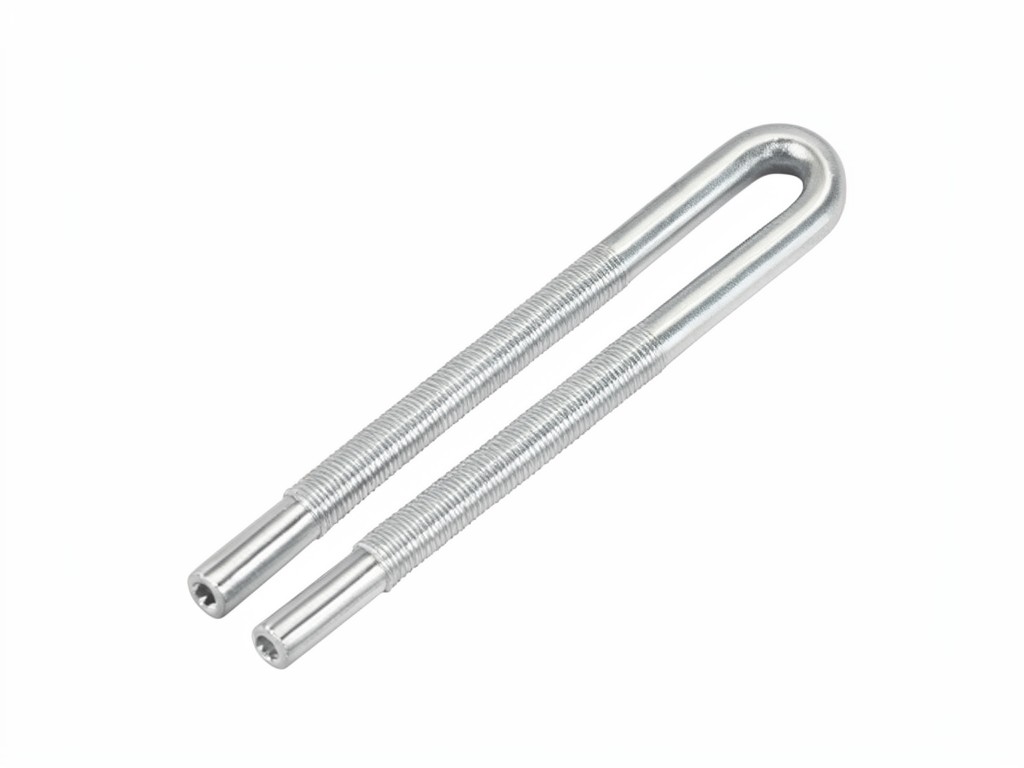
Threaded U-Bolt With Nuts
A compact choice for buyers whose installation already includes a compatible crossbar or mounting surface. Fewer supplied parts reduce pack complexity and make replacement straightforward.
Select it when the existing support controls pipe position and the installer needs adjustment through nut travel alone. Confirm enough thread remains engaged after final positioning.
U-Bolt With Adjustable Saddle
The saddle or plate adds a bearing surface and a further fit variable. It suits assemblies where the support plate is part of the specified restraint rather than a separate site component.
Check plate width, hole spacing and the available adjustment range against the mating bracket. More components require clear pack identification so the correct pieces reach each installation.
Finish selection: zinc-plated carbon steel can suit dry or sheltered service at a lower part cost. Hot-dip galvanized steel provides a thicker zinc layer, but coating buildup can affect thread fit and nut travel. Stainless steel may suit washdown or corrosive environments; confirm the grade against the actual chemical exposure and mating hardware.
Usage Scenarios and Buyer Segments
On outdoor pipe runs, installers tighten and retighten supports through seasonal temperature changes, with rain, dust and incidental abrasion at exposed brackets. A distributor serving building-services contractors will usually prioritize repeatable pipe fit, clear size identification and replacement nuts that match the original thread.
- Water-treatment and pool-equipment maintenance teams need finish choices that reflect chlorine exposure, wash frequency and the chance of trapped moisture beneath a support.
- Agricultural and irrigation distributors commonly handle outdoor storage and dusty installations; sealed, separated packs help prevent mixed sizes and coating scuffs before dispatch.
- Industrial MRO buyers may order replacement sets for an installed bracket, so matching the original inside width, leg length, thread and saddle footprint can matter more than changing the product design.
These parts restrain or support pipework as designed; they should not be treated as lifting points. Where vibration, thermal movement or a specified structural load governs the installation, the buyer must provide the application details for engineering review rather than infer capacity from bar diameter alone.
Segment-Specific Requirements
During a private-label launch with a fixed ship date, the main exposure is often a late change to drawing details or retail pack requirements. Freeze the approved sample, dimensional drawing, finish description and label artwork as one revision set; a change to any of them can affect production checks, coating compatibility or carton preparation.
Procurement officers should confirm how the factory identifies production lots, records inspection results and separates variants in the export pack. Distributors should specify carton labels that support warehouse picking. Wholesale buyers managing replenishment benefit from retaining the approved sample and purchase-order revision, so a reorder does not rely on an old product photograph.
If an order requires a coating resistant to regular cleaning, state the cleaning agent, concentration where known, contact time and rinse practice. A generic “corrosion resistant” request cannot determine whether zinc-coated carbon steel or a stainless option suits the service. Sample approval should include a trial with the actual mating nut and bracket, not visual review alone.
Setup, Use and Replacement Parts
At installation, check that both legs sit square to the mounting surface and that the nuts engage evenly. Uneven tightening can pull the bend off centre or load one leg more than the other. Use the tightening practice specified for the assembly; do not substitute a higher torque without confirming the pipe, bracket and fastener design.
- After washdown or exposure to salts, rinse where the application permits, then dry the assembly and inspect coating damage, rust staining and deposits around threads or contact points.
- For stored inventory, keep parts dry and separated by finish. Abrasion between loose metal components can expose the base material, while damp cartons can hold moisture against the coating.
- Replace a U-bolt that shows a cracked bend, distorted legs, damaged threads or significant corrosion. Order nuts, washers and saddles by the same thread and drawing revision as the original set.
For repeat supply, align the sample approval, lot identification, carton count and finish record before the production slot is booked. Lead time and minimum order quantity depend on size range, material, coating route and pack format; a consolidated size schedule helps the factory quote those variables without redesigning the product.
Discuss Your U-Bolt Order
Send the drawing or sample reference, material and finish requirements, target quantities by size, and any private-label packaging details. The factory team can review fit checkpoints, replacement-part matching and the production plan before quotation.
Discuss your project with the factory