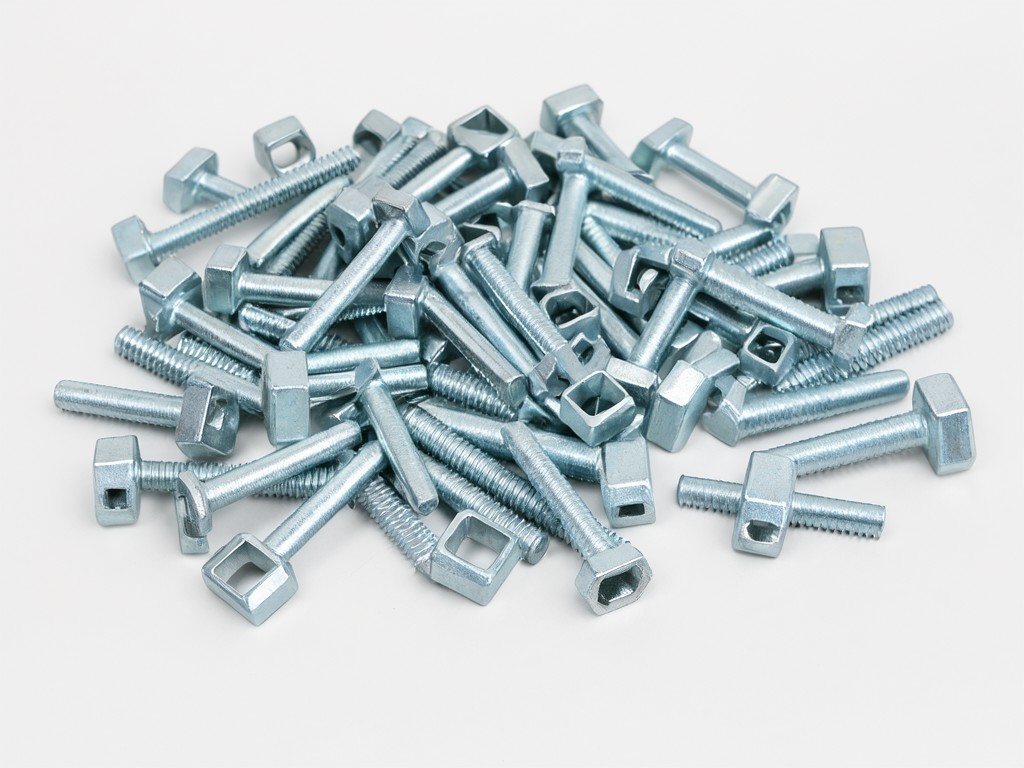
Wholesale galvanized heavy duty square u bolts Factory - Bulk Supply and Specification Guide
What This Product Is and Where It Fits
Before comparing quotations, check that the square bend and inside width match the section being clamped; a small fit error can leave the load on the corners instead of across the bearing faces. Galvanized heavy-duty square U bolts are formed steel fasteners with two threaded legs, used to secure square or rectangular members, pipe supports, frames and equipment brackets. For repeat orders, the useful comparison is not rod diameter alone: it is dimensional fit, thread engagement and coating condition against the buyer’s installation and exposure.
Fit dimensions
Inside width and height
Set to the mating section and clearance.
Load-related dimensions
Rod diameter and leg length
Selected against clamp load and available nut engagement.
Finish and assembly
Galvanizing route and thread fit
Confirm the coating process and compatible nut before production.
Where Cheaper Alternatives Fall Short
Two suppliers quoting the same nominal rod diameter may not be quoting the same finished part. Bend radius, leg parallelism, thread length and zinc buildup at the threads all affect fit at installation. A lower unit price can turn into rework when the U bolt rocks on its seat, needs forced alignment, or will not accept the specified nut after coating.
For bulk orders, ask how each point is controlled and checked:
- Inside width, inside height and leg spacing against the approved drawing.
- Thread length, pitch and nut run-on after the specified galvanizing process.
- Zinc coverage at the bend, leg transitions and threaded ends, where handling and drainage can leave visible variation.
- Batch identification and packing that prevents parts from rubbing together during transit and storage.
If the fastener will be installed repeatedly across a production line, a first-article fit check is usually less costly than discovering tolerance drift after a full shipment arrives.
What the Design Has to Balance
A square U bolt must clear the clamped section yet sit close enough to restrain it without excessive movement. Increasing rod diameter can support a higher specified load, but it also changes nut size, installation access, part weight and cost. Longer legs solve stack-height or washer-clearance issues only when the usable thread length remains sufficient for the selected nut and tightening arrangement.
Drawing rule: define whether inside dimensions are measured before or after coating, then use that same basis for samples and repeat lots. Specify the mating member, nut and washer arrangement as well; a drawing that gives only outside width leaves fit open to interpretation.
For equipment exposed to frequent washdown, distinguish ordinary outdoor moisture from chemical cleaning. Zinc coating can be damaged by persistent chloride or acidic exposure, so a pool-equipment or chemical-wash application needs an exposure review rather than an assumption that every galvanized finish is suitable.
Material Options and Their Trade-offs
Carbon steel is the usual base material for a heavy-duty square U bolt; the grade should follow the buyer’s required load and design basis. Hot-dip galvanizing generally gives a thicker zinc layer than electrogalvanizing, with a corresponding increase in coating variation and a greater need to account for thread fit. The correct route depends on exposure, dimensional tolerance and the assembly method, not finish appearance alone.
| Configuration | Material and finish | Size and weight basis | Trade-off for the buyer |
|---|---|---|---|
| General outdoor mounting | Carbon steel, hot-dip galvanized after forming and threading, subject to thread-fit agreement. | Rod diameter, inside width, leg height and thread length set from the drawing; finished weight calculated from the selected dimensions and coating. | Thicker zinc protection for outdoor exposure, with more coating variation to allow for at assembly. |
| Indoor or controlled exposure | Carbon steel with electrogalvanized finish, where the exposure and buyer specification permit. | Same drawing dimensions; weight remains primarily dependent on rod diameter and formed length. | Typically a thinner coating and more controlled dimensions, but less zinc reserve for sustained outdoor exposure. |
| Wet, chlorinated or chemical-cleaning area | Material and coating selected after review of the actual chemical, concentration and cleaning frequency. | Drawing dimensions remain the starting point; confirm any coating allowance and nut compatibility for the chosen route. | Do not price from a generic galvanized description; chloride or acidic exposure can shorten coating service life. |
Finished weight is a useful receiving check for a stable design and pack quantity, but it does not replace dimensional inspection. Agree the drawing revision, material grade and coating route before setting a target weight per piece or per carton.
Construction Method and Its Effect on Consistency
A typical production route cuts steel rod to length, forms the square bend in tooling, prepares the threaded legs and applies the agreed galvanizing process. Bend tooling controls the inside profile and leg alignment; worn tooling or inconsistent rod positioning can shift the opening across a long run. Process checks at forming and threading help catch that drift before the batch reaches coating.
For hot-dip galvanized parts, coating can build on threaded areas and alter nut run-on. Buyers should approve how threads will be kept usable, whether by process control or post-coating thread correction, and confirm the mating nut against production samples. Coating after forming also reduces the risk of bare steel at the bend compared with a finish applied only to straight stock before bending.
A repeat-order control plan should retain the approved sample or drawing revision and record key dimensions by production lot. That record makes it easier to trace a fit complaint to forming, thread preparation or coating rather than treating each reorder as a fresh specification.
Measured Performance in Real Use
Service performance depends on both clamp design and installation. The U bolt must match the supported member, and tightening must follow the assembly designer’s load requirements; a fastener supplier should not substitute an assumed load rating for the customer’s design basis. For OEM approval, practical checks include dimensional measurement, thread engagement with the specified nut, coating coverage and visual review of the formed bend.
UV exposure does not usually determine the steel fastener’s coating life, but it can degrade exposed labels and packaging. Damp storage can produce white corrosion on zinc, while abrasion during bulk handling can mark the coating. Sweat and routine washing matter mainly on equipment fittings; frequent chloride-based cleaning is a separate exposure that needs an agreed coating assessment.
Where corrosion life is a purchase criterion, agree the inspection method and acceptance limits before sampling. Salt-spray testing can support comparison only when the test conditions and acceptance criteria are specified; a test duration by itself does not predict service life in a particular installation.
Option Comparison by Usage Level
Controlled or Intermittent Use
For indoor fixtures and sheltered equipment, a lighter coating route may meet the purchase requirement if the service environment is dry and the specification allows it. Confirm the coating level and thread fit; do not assume this option suits outdoor storage or repeated washdown.
Frequent Outdoor or Service Use
For repeated installation, outdoor equipment or exposed support frames, hot-dip galvanized construction can provide a greater zinc reserve. Budget for coating variation, a compatible nut and checks on critical dimensions after coating; corrosive cleaning chemicals still require a separate material review.
The cost-efficient choice is the option that meets the actual exposure and fit requirement without adding coating or material cost that the application does not use. Compare landed cost alongside rejected-part risk, installation time and the expected reorder interval.
Stock Availability and Reorder Planning
Stock availability depends on the rod diameter, square opening, leg length, thread specification and finish combination. Common production sizes may be scheduled more readily than drawing-specific dimensions, while a new bend tool or a nonstandard thread can add setup time. Confirm current stock and lead time against the full specification rather than the nominal size alone.
For repeat orders, keep the approved drawing revision, finish requirement, pack quantity and label details together. Specify separators or protective packing if parts could abrade one another in transit, and store delivered cartons dry to limit moisture-related white corrosion. Private-label buyers can also confirm carton marks and batch traceability before the first bulk run.
A quotation review is most useful when it checks the complete part definition: base material, finished dimensions, thread and nut fit, coating route, inspection points, packaging and reorder assumptions. Send the drawing or a sample, plus the service environment and forecast quantity, for a quote based on the same basis as your approval sample.
Request a quotation review: share your drawing, annual or batch volume, target finish and installation conditions. Contact the factory team to review fit, coating and repeat-order controls before production.