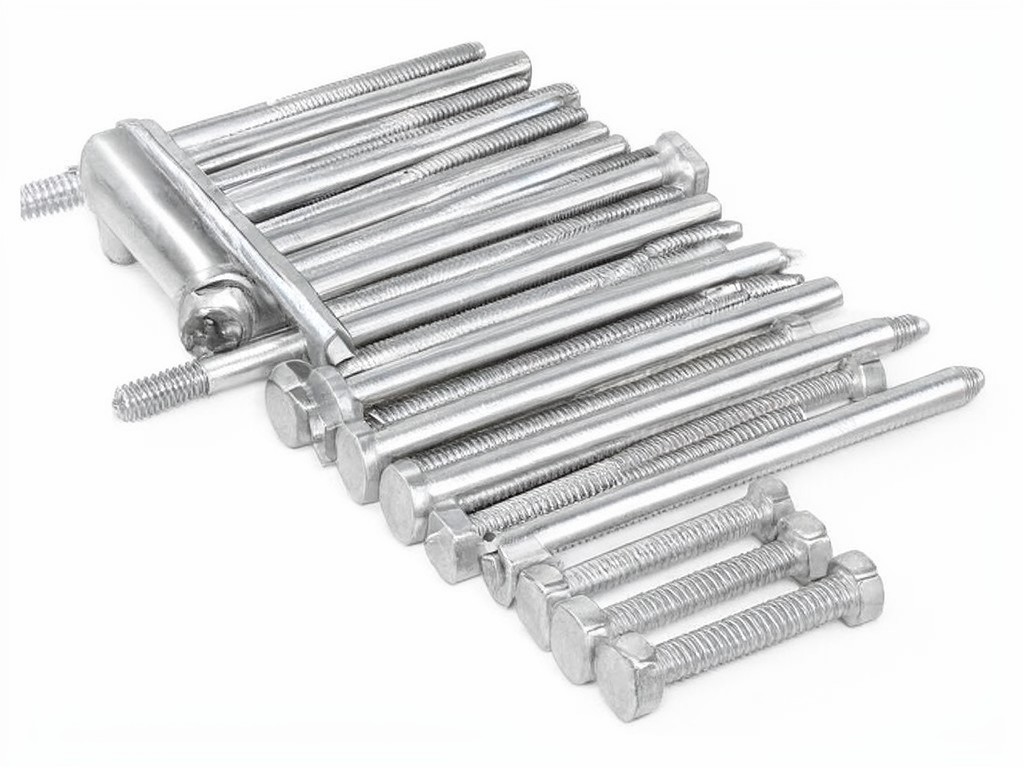
OEM stainless steel trailer axle u bolts Exporter: What Buyers Should Check Before Ordering
Deflection under load governs the U-bolt specification: the fastener must match the axle profile, spring pack and clamp arrangement, not just the nominal axle size. For OEM and private-label orders, a controlled drawing and repeatable forming setup are usually worth more than a lower first-quote unit price if they prevent fit-related returns and warranty claims.
Design Constraints Behind the Specification
The interface between parts determines whether the clamp seats evenly. Inside width, inside length, bend radius, leg length and thread length all affect how the U-bolt sits around the axle and passes through the spring plate. A mismatch can pull one leg off-axis, reduce usable thread engagement or concentrate pressure at the bend.
Start from the axle section and the full clamp stack, including plate thickness, washers and nut engagement. Round and square axle profiles require different bend geometry; spring-pack thickness and the specified tightening procedure also affect the usable leg length. Confirm whether dimensions are inside or outside measurements on the drawing, and identify the datums used for checking them.
Fit geometry
Inside width and lengthMatch the axle profile and clamp stack.
Clamp engagement
Leg and thread lengthAllow for plate, washers and nut engagement.
Load path
Bar diameter and bendConfirm against the approved axle design.
Repeat-order control
Drawing revision and datumsKeep every batch tied to the same released specification.
Stainless steel is not automatically a direct replacement for a specified high-strength axle fastener. The OEM design authority should confirm the required material condition, clamp load and tightening method before a grade change; the material name alone does not establish suitability.
Materials and Construction Trade-offs
Grade selection is a balance between exposure and the mechanical requirements of the clamp. In road-service environments with salt, washdown or coastal exposure, 316 stainless is commonly considered for its added corrosion resistance; 304 can suit less aggressive conditions at a lower material cost. Neither choice should be approved without checking the required strength and service conditions for the specific axle assembly.
| Material or construction choice | Size and weight basis | Buyer trade-off |
|---|---|---|
| 304 stainless steel bar, cold formed to the released drawing | Diameter, inside dimensions, leg length and unit mass are drawing-controlled; confirm the complete dimensional set before quotation. | Often a cost-conscious option for moderate exposure, subject to OEM confirmation of mechanical requirements. |
| 316 stainless steel bar, cold formed to the released drawing | Uses the same drawing-controlled dimensions; unit mass follows bar diameter and finished geometry. | Higher material cost may be justified where salt or frequent wet exposure raises corrosion-related replacement risk. |
| Specified strength grade or material condition | Set the grade, condition and finished dimensions in the purchase specification; do not infer them from appearance. | Requires engineering approval and clear purchasing controls, but avoids unapproved substitutions between batches. |
For a repeat order, freeze the material grade and condition alongside the dimensional drawing. If the application demands a different combination of corrosion resistance and mechanical properties, treat it as an engineering change rather than a purchasing substitution.
How It Is Built and What That Changes
For standard production, stainless bar is cut to length, cold formed in a controlled fixture, and threaded after bending. The fixture sets the leg spacing and bend profile; the thread operation sets the usable engagement at each end. When dimensions are close to the forming equipment’s practical range, dedicated tooling helps hold geometry from the first approved batch through repeat production.
A formed part should be checked against agreed datums for inside width, leg parallelism, overall leg length and thread dimensions. Go/no-go thread gauges and a documented first-piece approval can catch a setup drift before it reaches a shipment. Record the drawing revision, material batch and production lot together; that traceability makes a dimensional complaint easier to isolate without mixing affected and unaffected stock.
Batch-control point: approve the first formed sample against the production drawing, then retain the same fixture settings and revision record for reorders. Changing bar grade, bend tooling or thread setup without a controlled review can alter fit even when the nominal part number remains unchanged.
Buying Mistakes That Lead to Returns
Most avoidable returns start with an incomplete interface definition, not a defect that is obvious in a carton. A low unit price can be outweighed by rework, vehicle downtime, warranty handling and the cost of sorting mixed batches.
- Ordering from axle diameter alone, without specifying profile, inside dimensions, bend radius and spring-plate stack.
- Treating 304 or 316 as an automatic substitute for the originally engineered fastener grade.
- Leaving thread pitch, thread length, nut fit or the dimensional datum undefined on the released drawing.
- Accepting a sample without locking the material, tooling setup and drawing revision for the production order.
- Comparing quotations by piece price while overlooking lot identification, protective packing and the cost of replacement stock.
A purchase specification that closes these gaps reduces the chance that a reorder fits differently from the approved sample. It also gives both sides a clear basis for resolving a claim.
Usage Scenarios and Buyer Segments
Trailer axle and suspension OEMs typically specify U-bolts as part of a matched clamp assembly, where the axle profile, spring pack and plate geometry are controlled together. Their priority is a repeatable fit across production lots, plus traceability that links finished parts to the approved material and drawing revision.
Parts distributors and private-label importers often serve repair shops maintaining utility, cargo or specialty trailers. For fleets exposed to road salt, coastal air or frequent washdown, the material decision should reflect the actual exposure and the axle maker’s mechanical requirements. Clear carton identification and consistent lot separation help distributors avoid mixing visually similar but differently specified parts.
If you are moving from a sample to a repeat production order, share the axle profile, clamp-stack drawing, target material and forecast batch quantity for a tooling review. Contact the team to review the drawing and forming setup before the production specification is released.