oem stainless steel metric sleeve anchor flange bolts china factory - Bulk Supply and Specification Guide
Selection trade-off: a lower-cost stainless grade or lighter anchor assembly reduces piece price, but only suits the exposure, fixture geometry and base material it was selected for. Agree the steel grade, sleeve dimensions, flange or head style and installation envelope against an approved drawing or sample before a repeat order.
The Problem Buyers Keep Paying For
Replacement rate, not unit price, determines the real cost of an anchor used across repeat facility projects. A small mismatch in sleeve length, thread engagement or flange dimensions can delay installation, leave a fixture loose, or force a crew to sort parts on site.
Failures often begin with an incomplete specification. “Metric stainless sleeve anchor” does not define the base material, hole depth, fixture thickness, embedment, edge distance or corrosion exposure. If any of these change between the sample and production order, the same nominal size can produce a different installed result. A flange that seats cleanly against a bracket also affects the finished interface: mismatched bearing diameter or thickness can leave gaps or interfere with adjoining parts.
Set those conditions before comparing quotes. A defined assembly may cost more per piece, but it reduces field substitutions and repeat purchasing caused by fit problems.
Construction Method and Its Effect on Consistency
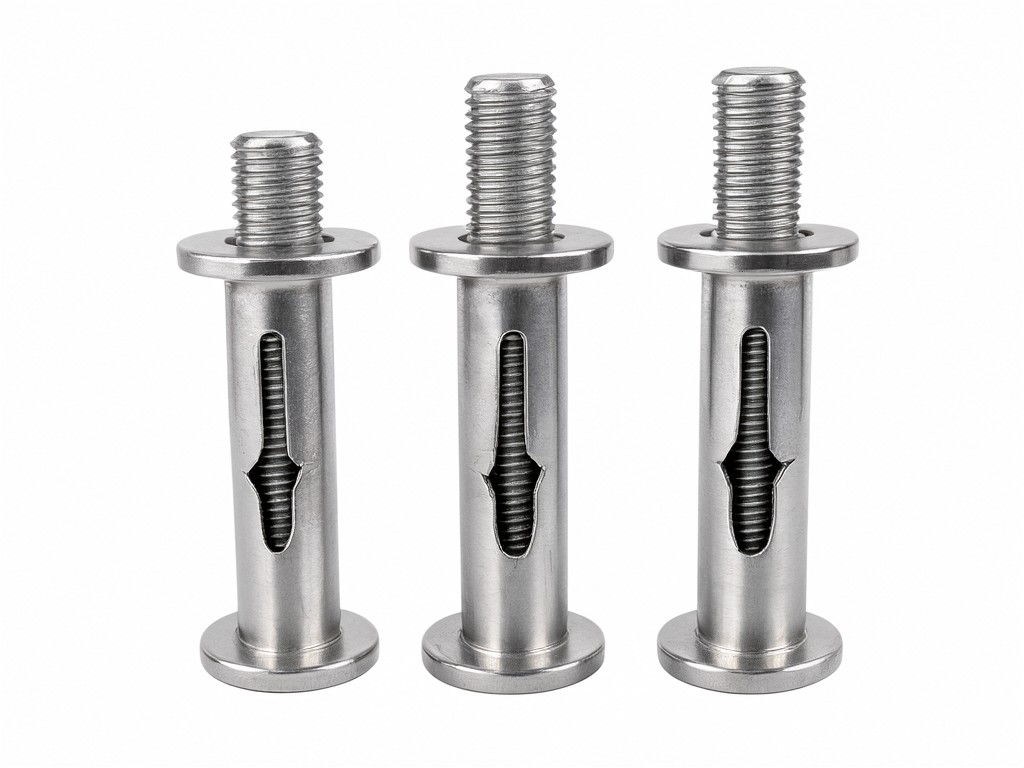
A typical sleeve anchor assembly combines a threaded bolt or stud, an expansion cone, a slotted sleeve and a washer or flange feature. Tightening draws the cone into the sleeve, which expands against the drilled hole. The exact stack-up depends on whether the requested flange is integral to the bolt head or supplied as a separate component; drawings should show that distinction rather than rely on the product name alone.
For repeat orders, the factory route commonly uses cold heading for the bolt form, thread rolling, sleeve forming and assembly. Turning may be selected for a special shoulder or flange geometry, but it adds machining time and material cost. A rolled thread is a practical choice for standard metric forms; custom head profiles or unusual under-head dimensions need a confirmed tool design and sample approval.
A drawing should identify nominal diameter, overall length, thread length, sleeve length, flange diameter and thickness, material grade, and any permitted dimensional variation. Confirm the sample with the actual fixture and installation method. Expansion-anchor capacity depends on the substrate and installation conditions, so no single load figure should be transferred across concrete, masonry or different embedment depths.
Size, Weight and Specification Range
The ranges below are for early quotation and planning, not a substitute for a controlled drawing. Length and component geometry change assembly mass; confirm the finished weight against the selected configuration and approved sample.
| Nominal metric size | Indicative overall length range | Indicative assembled mass per piece | Quote-stage detail to confirm |
|---|---|---|---|
| M6 | 40–80 mm | Approximately 10–40 g | Fixture thickness, sleeve length and head or flange style |
| M8 | 50–100 mm | Approximately 20–70 g | Thread length, hole depth and flange bearing diameter |
| M10 | 60–120 mm | Approximately 35–120 g | Substrate, embedment and installation clearance |
| M12–M16 | 70–150 mm | Approximately 60–300 g | Exact grade, component proportions and drawing tolerances |
These indicative masses can shift with the bolt-head design, sleeve wall, washer and material grade. Where a project has a strict weight or clearance limit, request the mass and envelope for the finalized assembly rather than applying a generic value to all lengths.
Option Comparison by Usage Level
General Indoor and Sheltered Use
A standard stainless grade, such as an A2-type option, can suit many indoor or sheltered installations when the specified substrate and exposure allow it. This route usually keeps material cost below a more corrosion-resistant grade. Confirm actual exposure, including cleaning chemicals and condensation, before approval.
Outdoor or More Corrosive Exposure
An A4-type option may be appropriate for outdoor exposure or locations affected by moisture and salts, subject to the project’s material requirements. The price premium buys a different corrosion-resistance profile, not extra expansion capacity. Keep the bolt, sleeve and other exposed components aligned to the agreed grade rather than mixing materials without approval.
For either option, the anchor’s suitability depends on the base material, hole condition, embedment and installation procedure. Select by the actual service environment and fixture load case; do not treat stainless grade alone as a load-rating upgrade.
Customisation Options and Their Limits
Custom work can cover bolt length, thread length, flange dimensions, sleeve length, material grade and surface finish. A change to sleeve geometry or the expansion cone can alter how the anchor sets, so it needs a revised drawing and a new sample approval rather than an informal substitution. Special tooling is more economical when the design is stable and the order volume can absorb its setup cost.
| Finish or surface option | Typical appearance | Specification point |
|---|---|---|
| As-supplied stainless surface | Natural metallic appearance | Agree acceptable surface marks and component appearance on the reference sample. |
| Passivated surface, if specified | Natural stainless appearance; not a decorative colour coating | State which components require treatment and confirm the required surface condition. |
| Electropolished surface, by request | Brighter, smoother metallic appearance | Confirm feasibility for the assembled geometry and any appearance requirement. |
| Coloured coating or marking | Colour depends on the requested process; not standard stainless appearance | Check coating compatibility with thread fit, expansion parts and the service environment before release. |
Stainless finish options generally retain a metallic appearance; colour is not inherent to the material. If colour identification is required, specify whether it applies to the bolt head, complete assembly or packaging label, and approve a physical sample before production.
Who Uses It and Where It Matters
Facility contractors and procurement teams use metric sleeve anchors to secure brackets, equipment frames, railing bases and other fixtures to suitable solid base materials. A club or academy purchasing manager may specify them for court-side equipment, storage frames or fixed facility fittings, where the selected anchor must suit the substrate, fixture plate and exposure rather than simply match a metric thread size.
For installations exposed to weather or wash-down, the material grade and finish require closer agreement. Where a clean, flush fixture interface matters to users, flange diameter, bearing surface and head profile should be checked against the mating part so the installed hardware does not leave a snagging edge or uneven seat.
Ordering, Tooling and Lead-Time Questions
What information should be on the first drawing?
Show the full assembly, not only the bolt. Include nominal thread size and pitch, overall and threaded lengths, sleeve and cone geometry, flange or washer details, material grade, finish, and the fixture and base-material conditions. Mark critical dimensions and tolerances so the factory can identify what controls fit and installation.
When does custom tooling affect price and lead time?
Standard metric sizes and established head forms usually avoid special tooling charges. A non-standard flange, shoulder or sleeve profile may require tooling development and sample approval before the production schedule is confirmed. Final timing depends on drawing release, material availability, tooling scope and approval turnaround.
Can a sample approve a repeat order?
Yes, if the approved sample is tied to the production drawing and material and finish requirements. Record any permitted variation and keep changes to dimensions, grade or surface treatment subject to written approval; otherwise, “same as sample” may not resolve differences between batches.
For a repeat-order quotation, send the drawing, target quantity, stainless grade, finish, application environment and any sample reference. Discuss the specification and project requirements with our team before tooling or production approval.