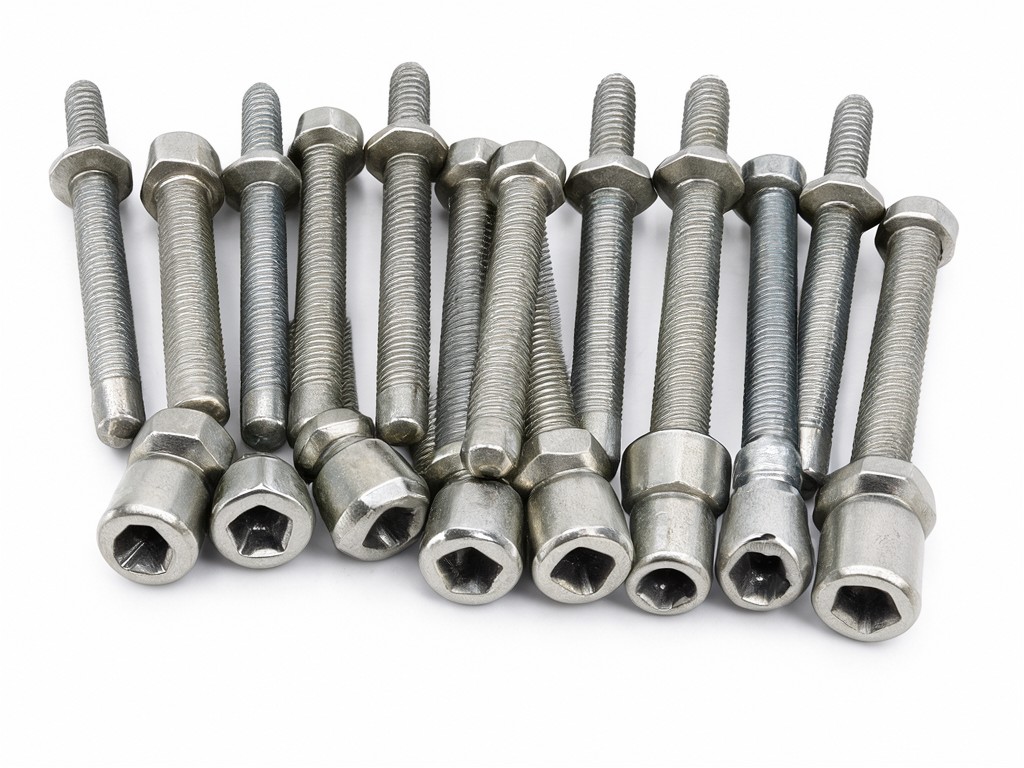
Buy 1 4 28 allen head socket bolts For Sale: Specification, Ordering and Quality Notes
Where Cheaper Alternatives Fall Short
Unit price and service life diverge when a 1/4-28 socket head bolt must hold preload through repeated assembly or exposure to moisture. A low quote can conceal thread pitch drift, inconsistent socket fit, or a finish that offers little protection in the actual environment; those defects lead to installation delays, returns, and replacement orders.
For importers and wholesale buyers, compare cost per saleable bolt, not just the quoted cost per piece. The decision rule is to specify the thread class, material, finish, and inspection points first, then compare pricing against the expected rejection and service costs.
| Use condition | Complaint seen in service | Specification or check that helps prevent it |
|---|---|---|
| Repeated assembly with a hand or powered hex key | Rounded socket corners or a driver that will not seat fully | Set socket width and depth on the drawing; inspect drive fit and socket condition by lot. |
| Mating with a tapped 1/4-28 hole | Cross-threading, binding, or excess play at installation | Confirm the thread class and gauge the external thread; do not substitute 1/4-20. |
| Outdoor or damp storage and use | Surface corrosion, finish discoloration, or seized threads | Choose material and coating for the exposure; validate corrosion resistance on the finished part. |
Design Constraints Behind the Specification
The designation 1/4-28 describes a nominal 1/4-inch diameter and 28 threads per inch. It is a Unified fine thread; the mating hole, thread class, engagement length, and substrate still determine whether the joint assembles and carries its intended load. A matching nominal size alone does not guarantee a suitable fit.
Socket-head geometry also sets limits. A deep drive socket can improve tool engagement, but it reduces the material available in the head; the head dimensions and drive size must be treated as a matched design, not independent catalogue fields. Thread rolling is common for production bolts, while the selected material and heat treatment affect forming capability, strength, and cost.
Specify the thread class and the mating-hole requirement together. If a replacement bolt must fit an existing assembly, approve a sample against the actual tapped part or a verified gauge before releasing a production order.
What Actually Determines Performance
Joint performance depends on the bolt material, thread engagement, mating-part strength, lubrication, and tightening method. A universal torque value is not appropriate: friction changes with coating and lubrication, and the same applied torque can produce a different clamp load across configurations.
For repeat orders, lot-to-lot consistency is a commercial requirement. Thread diameter and pitch, head dimensions, socket fit, and finish colour should stay within the approved drawing and sample range. Drift can disrupt automated assembly or make retail packs look inconsistent; incoming checks should therefore compare each lot with the approved reference, not only with its paperwork.
Weather resistance follows the material and finish choice. Black oxide has limited corrosion protection unless paired with an appropriate oil or protective packing, while stainless steel is often selected for humid service. Chloride exposure may call for a more corrosion-resistant stainless grade, but stainless fasteners can gall under some installation conditions.
Specification Range and Customisation Limits
A production specification should separate fixed interface requirements from selectable order details. Length is normally measured from beneath the head to the bolt tip; confirm the measurement convention on the drawing, particularly when replacing an existing part.
| Order parameter | Typical specification approach | Buyer confirmation required |
|---|---|---|
| Nominal size and thread | 1/4-28 Unified fine thread; state the required external thread class. | Confirm the mating thread and gauge acceptance requirement. |
| Length and head geometry | Set length, head diameter and height, and socket dimensions from the drawing or approved sample. | Check clearance, engagement depth, and tool access in the assembly. |
| Material and finish | Select alloy steel or stainless steel, then define coating or passivation as applicable. | Set strength, corrosion exposure, appearance, and any restrictions on coating. |
| Inspection and packing | Agree lot checks, count per package, identification, and export-carton configuration. | Define traceability and retail labelling needs before quotation approval. |
Comparing Two Standard Configurations
The lower-cost configuration is not automatically the lower-cost choice after installation, weather exposure, and returns are counted. Match the material and surface treatment to the service environment.
Alloy Steel With Black Oxide
Often selected for indoor machinery and cost-sensitive assemblies where strength is required and exposure is controlled. Black oxide can provide a consistent dark appearance, but it should not be treated as a stand-alone answer for wet or corrosive service.
Stainless Steel With Passivation
A practical choice for damp environments or assemblies where red rust is unacceptable. The material usually costs more, and the buyer should review galling risk, mating hardware, and the specific exposure before choosing a grade.
For either option, approve the finish colour and surface condition against a production sample. A change in finishing source or process can shift appearance between lots, even when the base material and dimensions remain unchanged.
Assumptions Buyers Should Stop Making
A catalogue description is not a complete purchase specification. These assumptions commonly cause avoidable inspection disputes and repeat-order variation:
- “1/4 inch” identifies the thread. It does not distinguish 1/4-28 from the coarser 1/4-20 thread.
- A bolt with the right thread will fit any socket-head application. Head height, socket depth, length, and tool clearance still matter.
- Stainless steel cannot corrode. Grade and exposure, including chloride contact, affect corrosion behaviour.
- A repeat order will match the previous lot without a retained sample, drawing revision, and agreed inspection criteria.
- A single torque value applies across finishes and joint designs. Friction and mating-part conditions change the resulting clamp load.
Who Uses It and Where It Matters
Importers and hardware wholesalers stock 1/4-28 socket head bolts for repair shops, machinery assemblers, and maintenance buyers who need a compact head with internal hex drive. Retail buyers may sell them as individual replacements or in assortments, where clear size identification and consistent counts help reduce mis-picks and customer returns.
Equipment makers use this size where the design calls for a fine-thread fastener and a recessed drive. Indoor enclosures can favour black oxide alloy steel; outdoor fixtures or damp service can justify a stainless option after the joint and exposure are reviewed. For all these buyers, stable dimensions and finish from one shipment to the next matter as much as the quoted unit cost.
Working as a Production Partner, Not a Catalogue Supplier
A production partner works from an agreed drawing or approved sample, checks critical dimensions and thread fit by lot, and records the material and finish supplied. That control gives buyers a defined basis for repeat orders and a clearer way to resolve a complaint than a generic catalogue description.
For private-label packs or wholesale cartons, settle the pack count, label fields, carton protection, and batch identification before production. These details affect handling and receiving costs, and a stable pack format can reduce errors across replenishment orders.
For a quotation review, send the required length, thread class, material, finish, expected order quantity, and target packing format. If replacing an existing item, include a drawing or approved sample so the quote reflects the actual fit requirement.
Request a quotation review with your specification and shipment requirements.